


What It Means to Be a Steward of the Land

How everyday action, science, and community care fuel our mission
When we talk about “stewardship,” we often think of big landscapes, complex ecosystems, and the long arc of conservation work. But at its core, stewardship is simple: it’s the commitment to care for the land so it can continue to care for us. And that responsibility isn’t reserved for scientists or conservation professionals — anyone can be a steward. Volunteers, neighbors, families, hikers, bird-watchers, students… it begins with each of us making a choice to step up.
Stewardship Starts With You
You don’t need a degree in ecology to make a meaningful impact. Good stewardship is rooted in paying attention, noticing what’s changing on the land, where invasive species are creeping in, how water is flowing, what wildlife is present, and how human use is shaping the space.
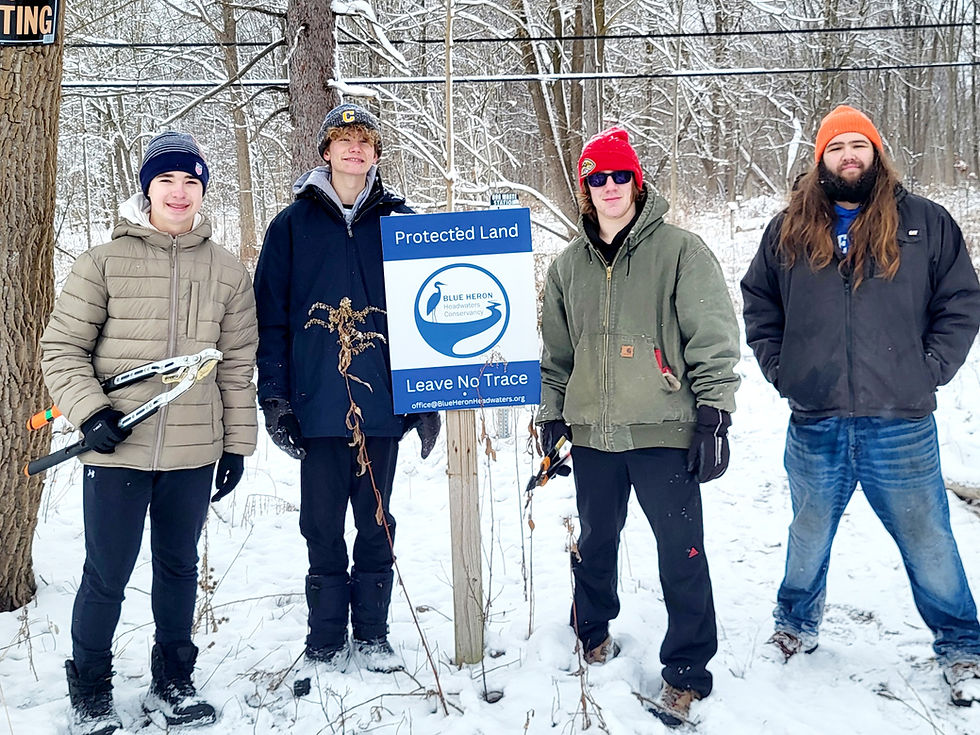
Every time a volunteer joins a workday, participates in a cleanup, helps with trail maintenance, plants native species, or shares knowledge with others, they are practicing stewardship. These actions add up. They protect important habitat, increase biodiversity, and support the resiliency of the landscapes we all depend on.
The Science Behind Stewardship
Land stewardship is grounded in ecological principles that guide how we care for natural spaces. Healthy ecosystems rely on biodiversity — a mix of plants, animals, and fungi — and stewardship helps maintain that balance by supporting native species and managing pressures like invasive plants.
Water and soil health are equally important. Groundwater recharge, the process where rainwater and melted snow seep into the ground to refill underground aquifers, supports streams, wetlands, and drinking water. By preventing erosion, protecting wetlands, and maintaining native vegetation, stewardship keeps soil stable and water clean, ensuring the land remains resilient for plants, animals, and people.
Connected habitats give wildlife the space they need to move, migrate, and adapt. Stewardship helps natural areas stay linked, allowing species to thrive and ecosystems to respond to change. And because natural systems are dynamic, shaped by storms, disease, and other disturbances, thoughtful care guides these landscapes through renewal so they continue supporting life for generations.
These concepts guide how we manage our lands. They are the backbone of the stewardship team’s work every day, and they are the same principles our volunteers put into action on the ground.
Why Stewardship Is the Force Behind Our Mission
At Blue Heron Headwaters Conservancy, stewardship isn’t just a program, it is the driver of everything we do. Protecting land is the first step. Caring for it, year after year, is what ensures these places remain healthy and resilient for generations.
Stewardship is the bridge between conservation goals and real-world outcomes. It is how our mission becomes visible: in the return of songbirds, in clean streams, in restored wetlands, in thriving native plants, and in the sense of belonging people feel when they walk a trail or volunteer at a property.
The Tools of the Trade
Stewards use a mix of simple tools and scientific insight:
Hand tools: loppers, hand saws, pruners, and shovels
Field guides and apps: plant ID, mapping tools, seasonal data collection
Monitoring skills: knowing what to look for, species presence, erosion, new growth, habitat change
Curiosity and care: the most important “tools” of all
And while our stewardship staff, led by Kyle, brings professional training and ecological expertise, our volunteers bring something just as valuable: time, energy, and a shared commitment to protecting the land we all love.
You Can Be a Steward
Stewardship is not a title, it is an action. A choice. A relationship with the land that grows every time you show up.
By volunteering, learning, or even simply noticing what’s around you, you play a direct role in keeping our natural spaces healthy. Our work is stronger when more people are involved. And the land is better for it.
If you’ve ever wondered how to get involved or make a difference, this is your invitation. Stewardship starts with you, and your impact is real.


Dopo esame, il livello di precisione è mantenuto in tutte le sezioni. Tutte le affermazioni sono supportate da osservazioni documentate. Il sito web serve come utile riferimento per ulteriori esplorazioni. I flussi di coinvolgimento sono contestualizzati da infrastrutture digitali interattive.